Research on mutualistic cleaners
Does coral restoration benefit the abundance and functional performance of mutualistic cleaner species? That’s what I aim to find out through research on four species: neon gobies, sharknose gobies, banded coral shrimp, and Pederson shrimp.
These mutualistic cleaning species fill an ecologically important role to remove parasites, dead tissues, and fungi off larger reef fish “clients,” which improves the overall health of reef fish populations.
Gobies and banded coral shrimp live on or underneath hard corals, while Pederson shrimp live in association with anemones on coral reefs. Thanks in part to their short lifespans and small home ranges, mutualistic cleaning species may be adaptable to changing environmental conditions. However, their persistence may ultimately be limited by coral reef health.
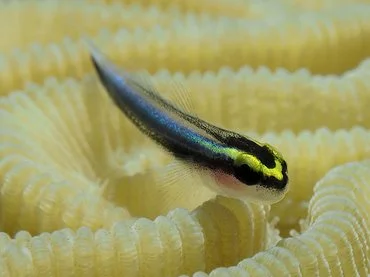
A sharknose goby (Elacatinus evelynae) is hosted on a boulder brain coral (Colpophyllia natans) in Bonaire. Photo from Charpin, F. (2025). Florent’s Guide to the Tropical Reefs.
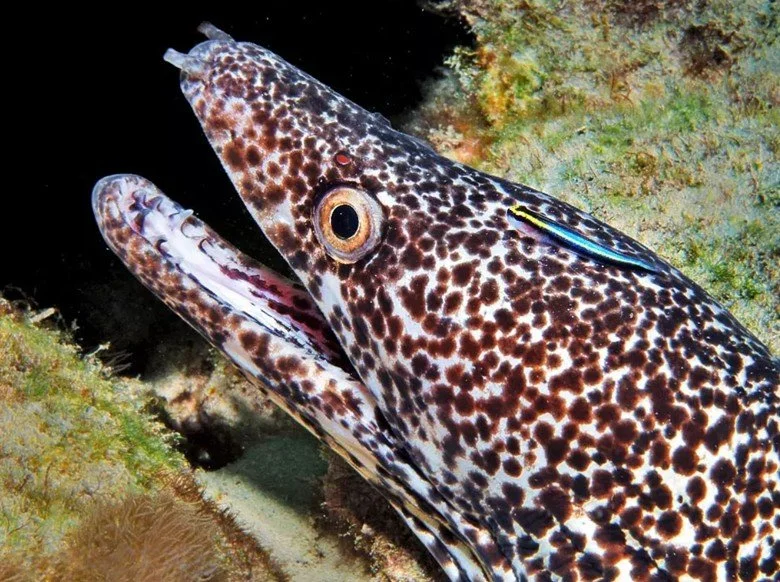
A sharknose goby (Elacatinus evelynae) cleans a spotted moray eel (Gymnothorax moringa). Photo from Jacobson, P.W. (2025). Elacatinus evelynae. Monaco Nature Encyclopedia.
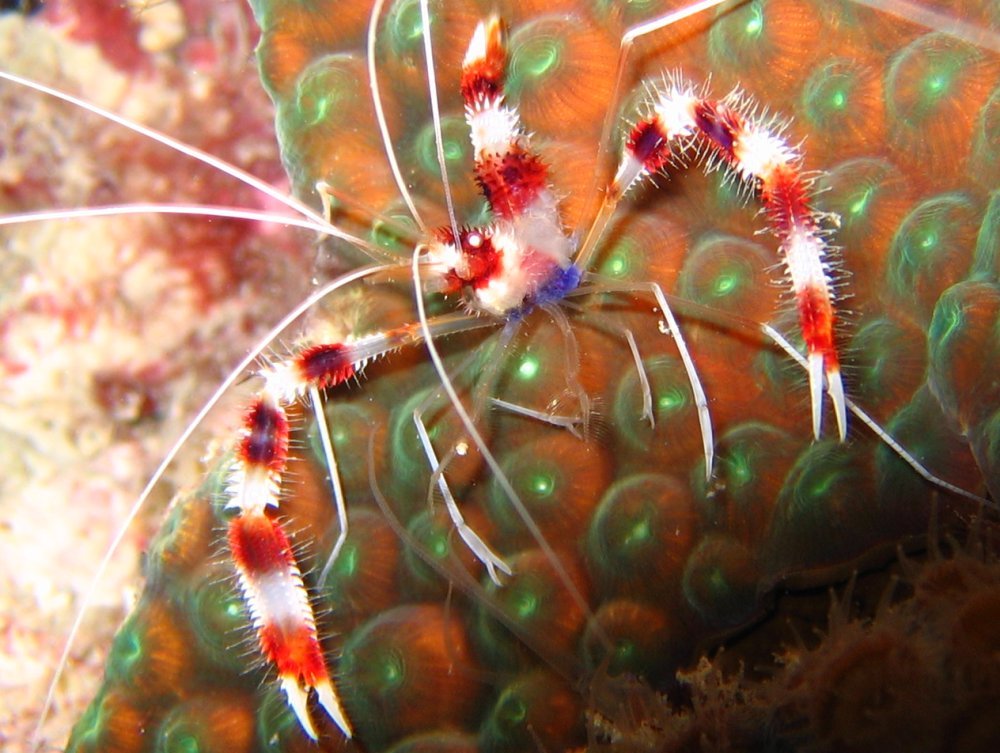
A banded coral shrimp (Stenopus hispidus) is hosted on a great star coral (Montastraea cavernosa) in Bonaire. Photo from Charpin, F. (2025). Florent’s Guide to the Tropical Reefs.
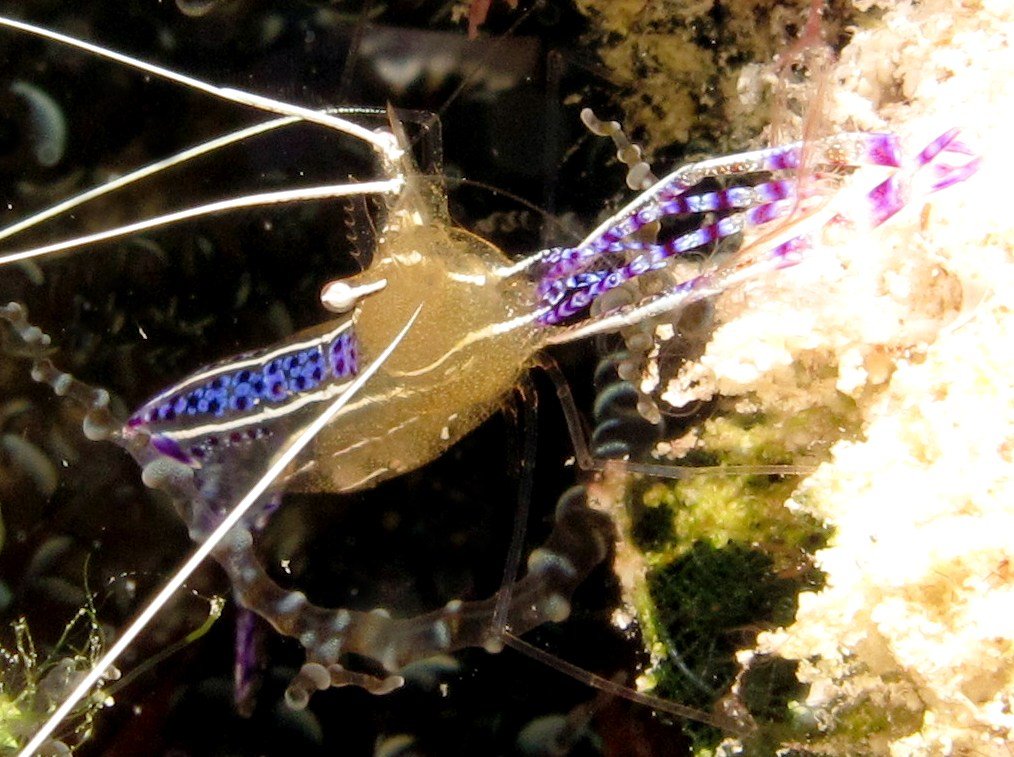
A Pederson shrimp (Ancylomenes pedersoni) is hosted on a corkscrew anemone (Bartholomea annulata) in Bonaire. Photo from Charpin, F. (2025). Florent’s Guide to the Tropical Reefs.
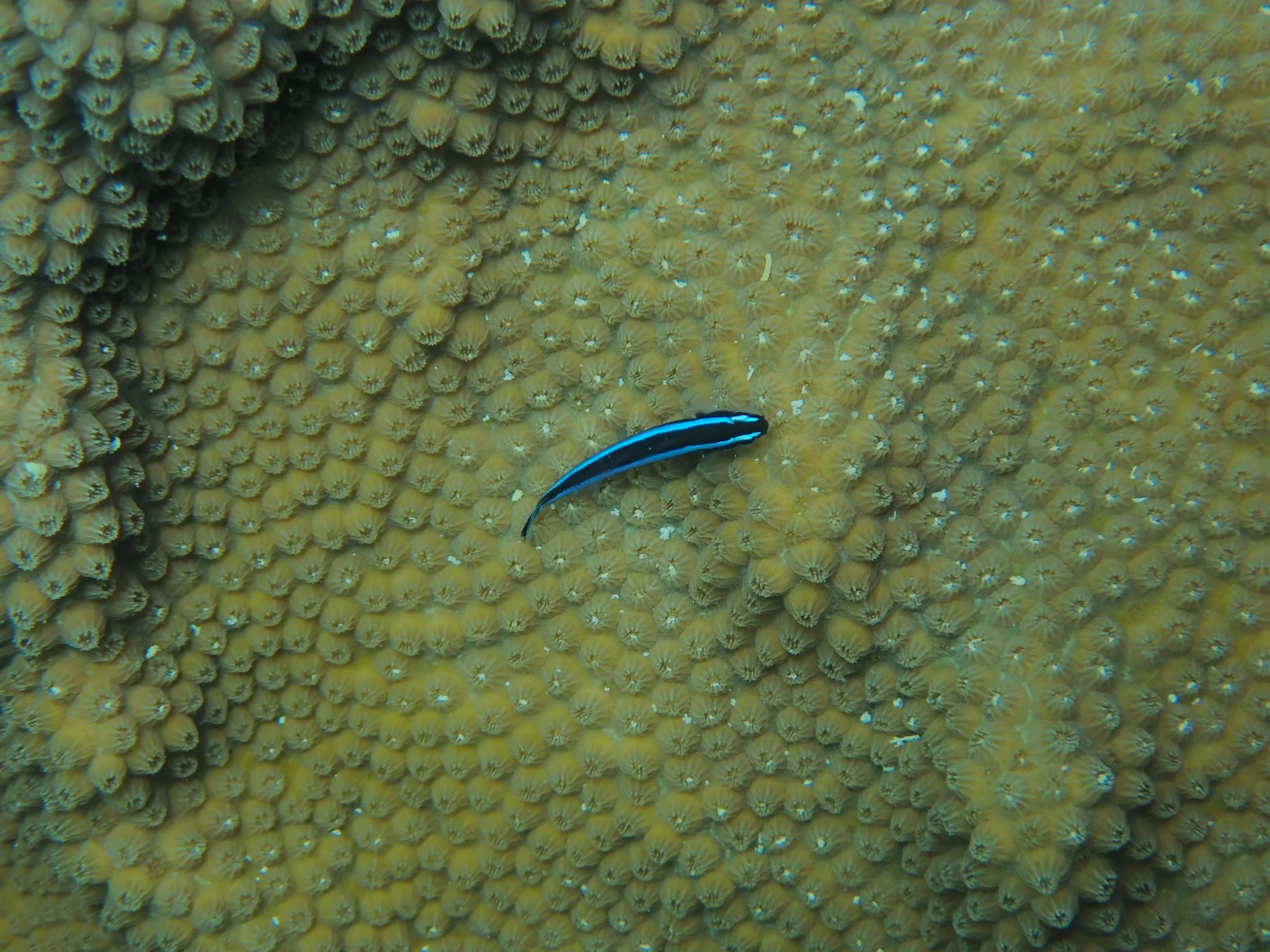
A neon goby (Elacatinus oceanops) is hosted on a great star coral (Montastraea cavernosa) in the Florida Keys. Photo by Sarah Rider.
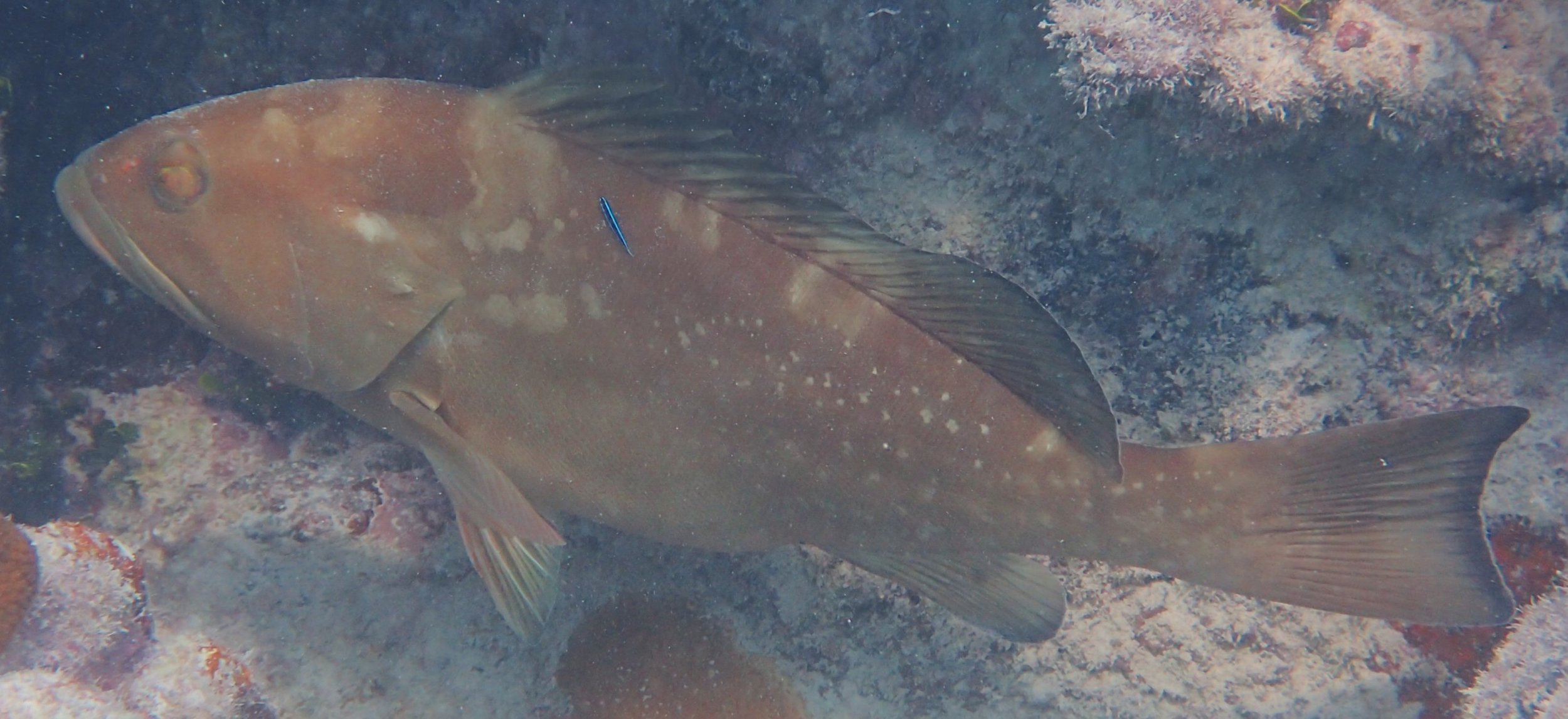
A neon goby (Elacatinus oceanops) is hosted cleans a red grouper (Epinephelus morio) in the Florida Keys. Photo by Sarah Rider.